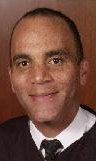
Nathan Hecht on the ubiquity of the phenomenon:
Potholes pock the surface of the civilized world. If potholes — all but yawning chasms capable of suddenly swallowing up an entire vehicle — posed an unreasonable risk of harm to anyone, let alone experienced and reasonably careful drivers, whole swaths of civilization would have to be closed off to human traffic.
Manhattan would be the first to shut down, but no city, town, or village would escape. Across the planet, ground transportation would be brought to a halt. Commerce would cease.
The end could not be averted by posting adequate warnings. Signs at city limits — Warning! Potholes! — would hardly be adequate. Each pothole would require its own warning sign. Even if available resources could supply enough signs, warnings that unreasonable danger is everywhere provide no warning that it is anywhere in particular.
Potholes do pose a risk of harm, no question. But the risk is simply not an unreasonable one unless the pothole is one of those rare, menacing kinds that lure unsuspecting travelers into danger. The potholes that permeated the dirt road to the Dolen sand pit were all of the ordinary variety.
Source: Dissent by Justice Hecht inTXI Operations, LP v. Perry, No. 05-0030 (Tex. Feb. 27, 2009)(Majority Opinion by Green)(premises liability, duty of warn of danger, private road defect, speed limit warning sign)
Showing posts with label legal duty. Show all posts
Showing posts with label legal duty. Show all posts
Saturday, March 28, 2009


Sunday, April 6, 2008
Justice Brister's Darwinism
Let blind men, carefree children, ... and consumers die!
In a particularly crass formulation of the Republican idea of individual responsibility and the denial of communal obligations, Justice Brister finds no legal duty to throw a drowning person a readily available rope, or to intervene quickly to stop a blind man or child from walking into traffic; Leaves it open whether there is even a moral duty for "a mere bystander" to act.
No compassionate conservatism here.
Deciding that an auctioneer was free to sell a car with defective tires [which was later involved in fatal roll-over], Brister approvingly cites World War II precedent for the proposition that the law should take a laissez faire attitude toward those about to be killed:
To wit:
“[A] mere bystander who did not create the dangerous situation is not required to become the good Samaritan and prevent injury to others. Under the last rule, a bystander may watch a blind man or a child walk over a precipice, and yet he is not required to give warning. He may stand on the bank of a stream and see a man drowning, and although he holds in his hand a rope that could be used to rescue the man, yet he is not required to give assistance. He may owe a moral duty to warn the blind man or to assist the drowning man, but being a mere bystander, and in nowise responsible for the dangerous situation, he owes no legal duty to render assistance.” Buchanan v. Rose, 159 S.W.2d 109, 110 (Tex. 1942)
New Texas Auto Auction Services, LP. v. Gomez de Hernandez, No. 06-0550 (Tex. Mar. 28, 2008)(Brister) (no auctioneer liability for selling defective car)
NEW TEXAS AUTO AUCTION SERVICES, L.P. D/B/A BIG H AUTO AUCTION v. GRACIELA GOMEZ DE HERNANDEZ, ET AL.; from Hidalgo County; 13th district (13- 03-00728-CV, 193 S.W.3d 220, 04-06-06)The Court reverses the court of appeals' judgment and reinstates the trial court's judgment.
Justice Brister delivered the opinion of the Court.
SUPREME BYSTANDERS?
Chief Wallace Jefferson recently protested that the Court's jurisprudence is not monolithic, and suggested that treating it as such would do an injustice to the concurrers and dissenters. ("In news reports or in editorial comments or even on the blogs, you get people talking about the court as if it's a monolith. Really the court is comprised of nine individuals.")
This case, though, is not one that provides evidence of the alleged ideological or jurisprudential diversity on the court.
All of the nine Republican incumbents appear to endorse Brister's laissez décéder doctrine, as none of them dissented even from the infamous footnote.
In a particularly crass formulation of the Republican idea of individual responsibility and the denial of communal obligations, Justice Brister finds no legal duty to throw a drowning person a readily available rope, or to intervene quickly to stop a blind man or child from walking into traffic; Leaves it open whether there is even a moral duty for "a mere bystander" to act.
No compassionate conservatism here.
Deciding that an auctioneer was free to sell a car with defective tires [which was later involved in fatal roll-over], Brister approvingly cites World War II precedent for the proposition that the law should take a laissez faire attitude toward those about to be killed:
To wit:
“[A] mere bystander who did not create the dangerous situation is not required to become the good Samaritan and prevent injury to others. Under the last rule, a bystander may watch a blind man or a child walk over a precipice, and yet he is not required to give warning. He may stand on the bank of a stream and see a man drowning, and although he holds in his hand a rope that could be used to rescue the man, yet he is not required to give assistance. He may owe a moral duty to warn the blind man or to assist the drowning man, but being a mere bystander, and in nowise responsible for the dangerous situation, he owes no legal duty to render assistance.” Buchanan v. Rose, 159 S.W.2d 109, 110 (Tex. 1942)
New Texas Auto Auction Services, LP. v. Gomez de Hernandez, No. 06-0550 (Tex. Mar. 28, 2008)(Brister) (no auctioneer liability for selling defective car)
NEW TEXAS AUTO AUCTION SERVICES, L.P. D/B/A BIG H AUTO AUCTION v. GRACIELA GOMEZ DE HERNANDEZ, ET AL.; from Hidalgo County; 13th district (13- 03-00728-CV, 193 S.W.3d 220, 04-06-06)The Court reverses the court of appeals' judgment and reinstates the trial court's judgment.
Justice Brister delivered the opinion of the Court.
SUPREME BYSTANDERS?
Chief Wallace Jefferson recently protested that the Court's jurisprudence is not monolithic, and suggested that treating it as such would do an injustice to the concurrers and dissenters. ("In news reports or in editorial comments or even on the blogs, you get people talking about the court as if it's a monolith. Really the court is comprised of nine individuals.")
This case, though, is not one that provides evidence of the alleged ideological or jurisprudential diversity on the court.
All of the nine Republican incumbents appear to endorse Brister's laissez décéder doctrine, as none of them dissented even from the infamous footnote.
Subscribe to:
Posts (Atom)